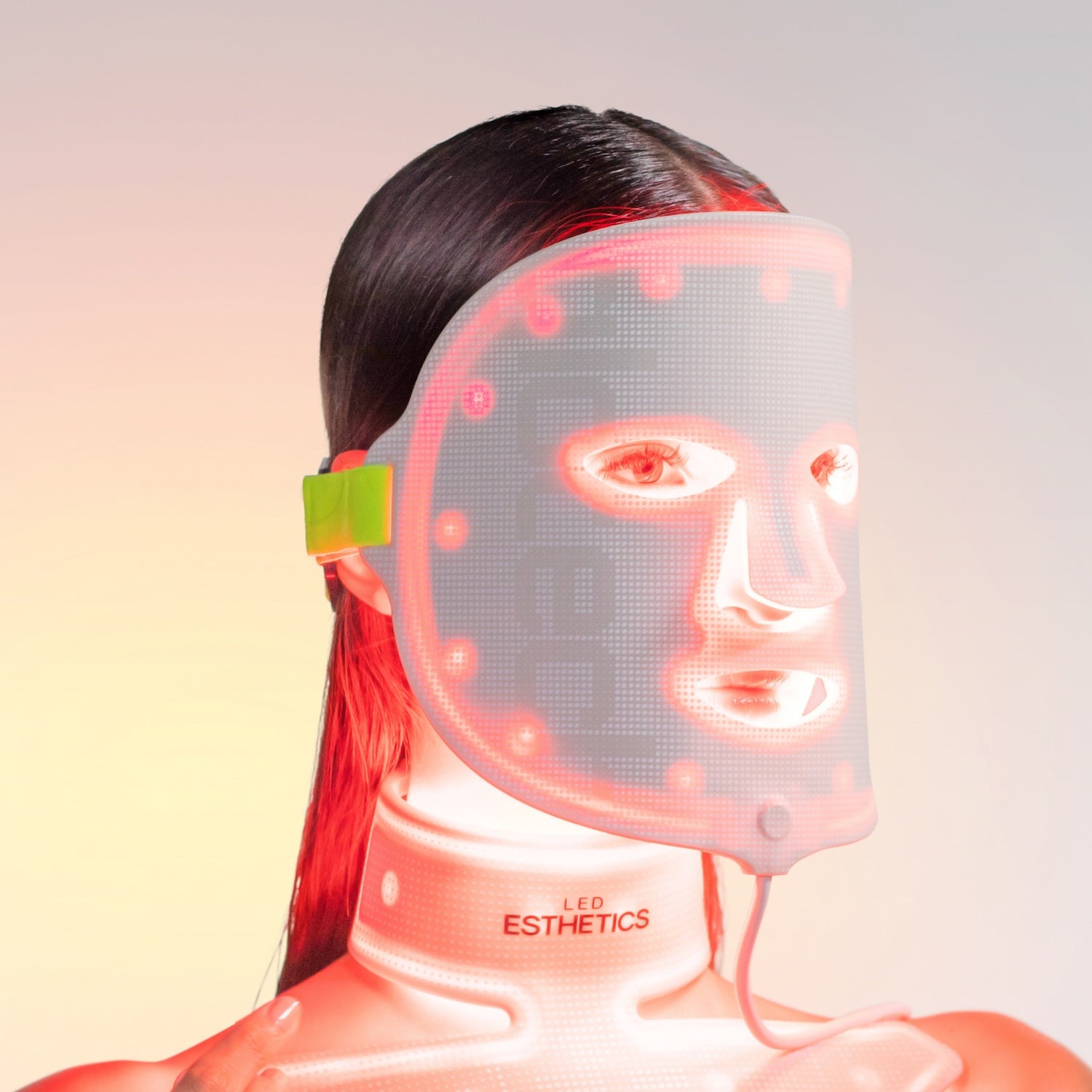
Microcurrent devices and LED face masks are the two most popular at-home anti-aging treatments, and they are constantly compared as alternatives to each other. Though both fall into the category of skincare devices, they work completely differently, and the gap is wider than the marketing suggests. A microcurrent device works the facial muscles to lift and sculpt. An LED light therapy face mask treats the skin itself, penetrating to different depths to clear acne, soften fine lines and wrinkles, reduce inflammation, and even out tone.
That difference is not just about how each treatment works. It runs through everything that follows: the skin concerns each device can reach, how quickly results appear and how long they hold, and what you need to know before committing to either. Choosing between them is less about which technology is better and more about which layer your concern lives in, and how much upkeep you are willing to take on. The comparison table below sets out the key differences, and the sections that follow cover what each treatment targets, how they work, and how long it usually takes to see results.
 LED Light Therapy Face Mask
|
 Microcurrent Device
|
|
|---|---|---|
| Technology | Medical-grade LED light therapy | Low-level electrical current |
| Treatment Depth | Up to 10mm | 1 to 2mm |
| Primary Target | Skin cells in the epidermis and dermis | Facial muscles beneath the skin |
| Treatment Modes | Anti-aging and anti-acne | Toning and lifting |
| Session Format | 10‑minute hands-free session | 5 to 20 minutes hands-on |
| Duration of Results | Builds session over session | Temporary, typically 3 to 7 days |
What Does Each Treatment Target?
The clearest way to settle this comparison is to stop asking which device is better and start asking what you want fixed. Each treatment reaches a different layer of the face, so each one answers a different set of concerns. Some overlap. Most do not.
Fine Lines and Wrinkles: LED light therapy addresses these at the source. Red and near-infrared wavelengths reach the fibroblasts responsible for collagen and elastin, so the skin gains density and lines soften as a result. Microcurrent can make wrinkles appear less pronounced by tightening the muscle underneath, but the line itself is unchanged and reappears as the lift settles.
Acne and Breakouts: Only LED reaches this concern. The blue wavelength targets the bacteria behind inflammatory acne while red and near-infrared calm the surrounding inflammation, which is why LED masks carry a dedicated anti-acne mode. Microcurrent has no mechanism for breakouts at all.
Sagging and Loss of Definition: Microcurrent is the stronger option here. Stimulating the facial muscles produces sharper contour through the jawline and cheekbones in a way light-based treatment does not replicate, and the change is visible the same day. The trade-off is that it is a maintained effect rather than a structural one, so it needs repeating indefinitely to hold.
Uneven Tone and Texture: These sit in the skin, which puts them out of reach for muscle stimulation. LED therapy improves both gradually by supporting cellular turnover and calming the low-grade inflammation that leaves skin looking dull and uneven. Results here are slower than a lift but they do not disappear between sessions.
Set out concern by concern, the pattern is hard to miss. Microcurrent covers one line of that list and does it well, giving you contour and definition no wavelength can replicate. LED light therapy answers the rest, treating the layer where fine lines, breakouts, tone, and texture all live, which is the difference between reshaping your face and improving your skin.

Which Skincare Device Is Right for You?
An LED light therapy face mask is the better choice for most people, because most concerns that bring someone to an at-home device live in the skin rather than the muscle. Fine lines, breakouts, inflammation, dullness, and uneven tone all sit within reach of red, blue, and near-infrared light, and unlike a muscle lift, the improvements stay put.
-
Reaches more concerns - Red and near-infrared treat aging while blue light clears acne
-
Results that stay - Improvements build in the skin itself instead of fading within days
-
Works hands-free - A 10-minute session with no technique needed is easier to stick with
-
Even coverage - Light reaches every area of the face at once, including nose and jawline
How Long Does Each Treatment Take to Show Results?
With microcurrent, the first session produces a visible change. Contour looks sharper, the face reads as lifted, and the effect is at its most obvious in the hours immediately afterwards. It then fades across the following 3-7 days as the muscle returns to its resting position, which is why protocols recommend an intensive opening series, often several sessions a week for the first month or two, followed by maintenance sessions indefinitely. The result is real, but it is rented rather than owned.
LED light therapy gives you nothing on day one. The first few weeks are spent supporting processes you cannot see, with visible improvement typically beginning around the 30-day mark at 3-5 sessions a week. From there it keeps going. Each session adds to the cellular work of the last, so month three looks better than month one, and skin treated consistently for six months is in a measurably different condition than skin that started yesterday. Nothing resets when you take a week off.
Can You Use Microcurrent and LED Light Therapy Together?
Yes, and for anyone who owns both, sequencing them properly gets more out of each. The usual approach is to run the microcurrent session first on cleansed skin with the conductive gel, then remove the gel completely and follow with a 10-minute LED session on clean, dry, product-free skin. Any residue left on the face during LED treatment sits between the light and your skin and reduces how much energy actually reaches the tissue, so that cleanup step matters more than it sounds.
There is no known interaction between the two treatments and no need to space them across separate days, though some people alternate simply to keep each session short. What does need attention is the contraindication list for microcurrent, which is longer than for LED. Electrical stimulation devices are generally not recommended for anyone with a pacemaker or implanted electrical device, anyone with epilepsy, or during pregnancy, and manufacturer guidance should always be checked directly. If any of those apply to you, LED remains available where microcurrent does not.
Marge, 68
Verified
Decided to give this mask a try after my esthetician recommended it. Using it daily for 5 weeks I’ve seen great results.
Kayla, 32
Verified
No more redness, breakouts or acne scars. My skin is glowing and I finally feel confident without makeup on!
Lisa, 47
Verified
I am so happy I tried this mask before resorting to laser. It’s worked miracles for my skin.
Iggie, 39
Verified
I’ve tried literally everything to cure my acne-prone skin and nothing has worked until I found this mask.
Adriana, 38
Verified
I can’t believe how much this mask has cleared my skin in just 3 weeks! My skin is literally glowing and all my dark spots are gone!
Karina, 39
Verified
I’ve save so much money using this mask at home. I’m blown away by how much better my skin looks and it’s so easy to use.
Tyler, 29
Verified
I was skeptical to use it at first but it’s definitely worth it. This mask really does work.
MK, 41
Verified
This mask addressed both my signs of aging and my hormonal acne/scars in one. And I saw great results in less than a month.
Jessie, 45
Verified
Always struggled with my skin, but this mask is truly a life saver. My skin texture is so much better and I feel like I look years younger.